What is Project Rudra?
Project Rudra (रुद्रा) is an ambitious attempt to build a modern digital library of ancient Indian texts. The name 'Rudra' represents the fierce, transformative aspect of the divine in Sanskrit, reflecting my mission to make these eternal texts accessible and meaningful to contemporary readers.
This library is managed by AI and designed to help you explore, understand, and appreciate the rich philosophical and spiritual heritage contained within these ancient works.
Why This Project?
Ancient Indian literature contains some of humanity's most profound philosophical and spiritual insights. Yet, much of this knowledge remains inaccessible today due to lack of awareness, scattered sources, absence of clear and understandable translations, and the lack of modern presentation suited to contemporary readers.
I have always been deeply connected to my Indian roots and curious about understanding our culture beyond rituals at the level of meaning and practice. At the same time, I have been a technology enthusiast. When I began exploring modern AI applications, a thought kept returning: what if Sanatana Gnan could be blended with modern technology in a way that makes it accessible to ordinary people, without diluting its essence?
This journey truly began when I created a dataset based on the Bhagavad Gita. The response was overwhelming, people loved it, engaged with it, and found value in it. That moment became a turning point for me. I decided that I wanted to contribute, in my own way, to bringing this knowledge into the light again.
My initial aim was to build a chatbot that could understand ideas directly from our ancient texts and respond to people's questions using the context of the scriptures themselves. From there, the vision expanded into something larger: a centralized digital space where people could read original texts and also receive contextual assistance through AI. I had the intention, but not a clear path forward.
While researching, I came across Project Artha by Yash Bonde. Seeing that work gave me clarity both in structure and direction. Inspired by that foundation, I began shaping my own approach, designing and building this project with the help of AI.
Why this logo?
From the beginning, I wanted a symbol that truly aligned with the nature of this project: timeless, and spiritual. I spent nearly half a day researching and experimenting, trying to translate an idea that existed only in my mind. I tested multiple prompts with tools like Gemini and ChatGPT, and went through multiple iterations.
I knew what I felt the logo should convey, but I struggled to describe it in words. After many attempts, the idea finally took form and when it did, it felt right. This logo resonated deeply with me, and I knew it belonged to the project.
Let me explain the depth behind its design.
At first glance, the form resembles a flower, while also evoking the Sun. The Sun, or Sūrya, represents light, the force that illuminates ignorance and brings one closer to truth and understanding. In Indian thought, light is closely associated with wisdom and realization.
The floral form signifies purity, a recurring symbol in Sanskrit and spiritual traditions, representing clarity, openness, and growth. Together, the sun-like radiance and floral symmetry express a balance between illumination and purity.
At the center lies a circular sphere, representing Rudra itself, the fundamental principle, the building block of existence. This central focus reflects the core philosophy of the project that is moving beyond surface knowledge toward essential understanding.
The color was chosen with equal care. It closely resembles Bhagva, a color deeply associated with Sanatana Dharma, symbolizing pursuit of truth, and spiritual continuity.
Sources
This was the most challenging part of the project.
Most ancient texts already exist, but mainly as scanned PDFs or images often blurred, aged, and printed using older techniques. These formats are difficult to work with digitally and unsuitable for meaningful exploration.
To address this, I researched and collected reliable digital text sources, carefully web-scraping select websites and bringing scattered material into one structured place. So far, I have organized over ten texts, many of which are not available elsewhere in this form, and I provide proper references to all original sources.
About the Creator
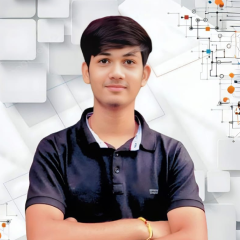
Project Rudra is created and maintained by Samir.
If you have suggestions or corrections, feel free to reach out.
If you find value in this work and wish to support its continued development, your support would be greatly appreciated. Maintaining the project including domain costs and the time invested over many days and nights requires sustained effort. Sponsorships help ensure that Project Rudra remains accessible and continues to improve for everyone.
